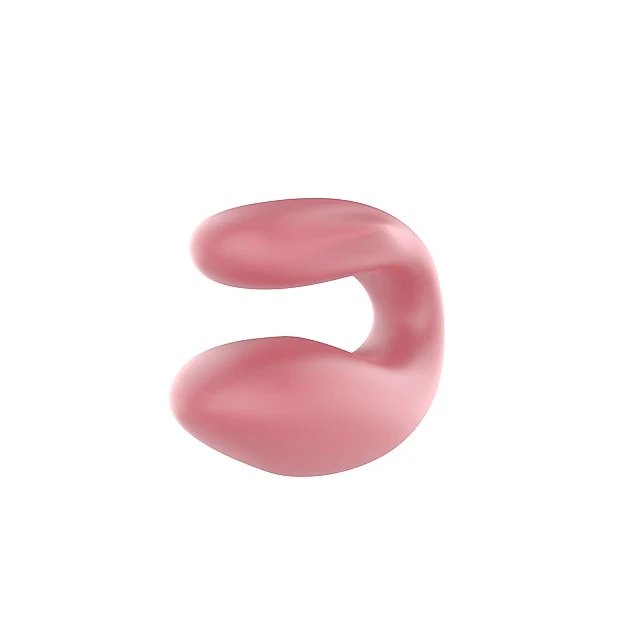
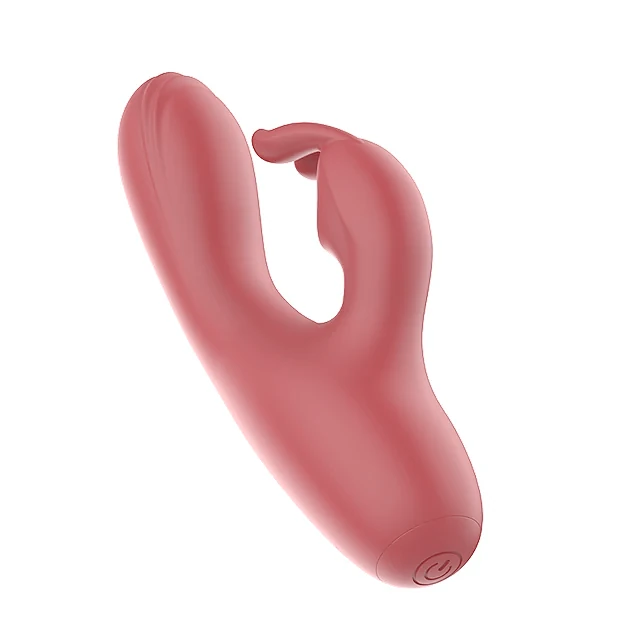
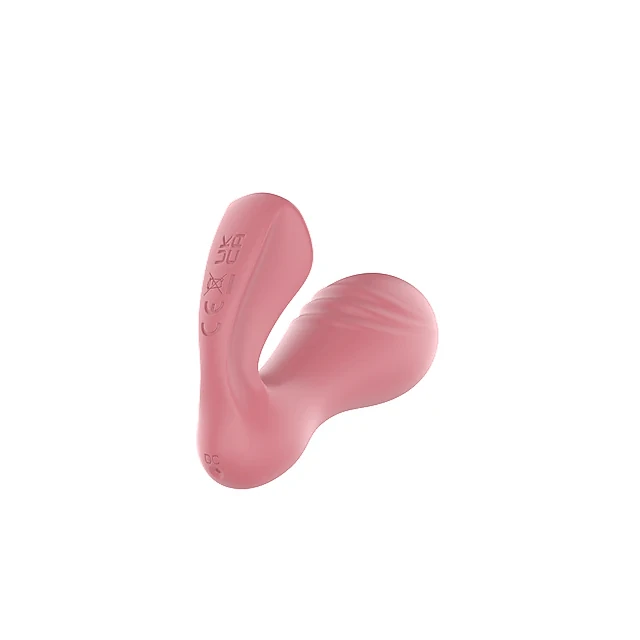
DuckDuo is an OEM and private label manufacturer as well as a retail brand: four ways to work with the same Dongguan factory that makes the DuckDuo retail line — from reselling our catalog to funding your own mold. MOQ 300 units, branded samples in 3–5 business days, production in 25–35 days, and a compliance pack on every order. Message us on WhatsApp or by email and a person replies with a quote, usually within one business day.
Scope, because the question comes up: this program covers body-safe personal massagers and intimacy-wellness devices. We do not manufacture mannequins, display figures or retail fixtures — those enquiries belong with a shop-fitting supplier, and we would rather say so on the first screen than in a reply two days later.
Stock wholesale resells our existing catalog under your brand. Private label puts your branding on our proven base SKUs. OEM builds to your specification. Custom mold is your own tooling and is eligible for regional exclusivity against a minimum annual volume. All four run from the same Dongguan factory with MOQ 300, branded samples in 3–5 days, and production in 25–35 days.
Pick the model that fits how far along you are — from a quick private-label launch to your own tooling.
| Stock wholesale | Resell our existing catalog under your brand. Ready molds, shortest lead time, MOQ 300 per SKU. |
|---|---|
| OEM to your spec | Build to a specification you provide — different shapes, motors, materials or firmware. Tooling quoted per project. |
| Private label | Your branding on our proven base SKUs. Pantone matching, dieline and 3D packaging mockups from the first sample round. |
| Custom mold | Your own tooling, funded by you, eligible for regional exclusivity against a minimum annual volume. |
MOQ, sampling, lead time and the compliance pack — the numbers the factory publishes, not a sales pitch.
| Minimum order (MOQ) | 300 units per SKU on existing molds and standard colorways. |
|---|---|
| Custom mold | From 1,000 units. Gift sets and multi-piece kits from 500. |
| Sampling | 3–5 business days for a branded sample. The sample cost is credited back on your first production order. |
| Production lead time | 25–35 days after sample approval and deposit. Rush orders of 20 days on in-stock base SKUs. |
| Quality control | Four stages — IQC, IPQC, FQC, OQC — with 100% final inspection. Outgoing defect rate below 0.1%. |
| Third-party inspection | SGS, Bureau Veritas and QIMA are all welcome before shipment. |
| Exclusivity | Regional exclusivity on tooling-funded custom molds. On standard SKUs, an NDA plus market exclusivity in your territory against a minimum annual volume. |
| Compliance pack | CE Declaration of Conformity, RoHS statement, MSDS, IPX5 test report and UN 38.3 ship with every order. |
| Certification scope | CE Declaration of Conformity and RoHS compliance ship with every order; FCC covered for the US market. The electronics meet EU personal-care-device directives. |
|---|---|
| Material standard (FDA) | Every skin-contact part uses body-safe, food-contact-grade silicone referenced against FDA food-contact material standards — a material-safety benchmark, not a device approval. |
| Silicone grade | Body-safe, food-contact-grade silicone (no latex, no phthalates) — the same grade across the catalog, documented per model. |
| Ingress protection | IPX5-tested water resistance on every waterproof model — rated for the shower and easy cleaning, verified per model. |
| MOQ range | 300 units per SKU on existing molds; custom-mold programs from 1,000 units; branded sampling in 3–5 business days. |
These four get used interchangeably in supplier emails, and the confusion costs buyers money. The differences below are the ones that change your MOQ, your lead time and what you are allowed to call your own.
| Program | What you get | Typical MOQ |
|---|---|---|
| White label | Our existing product, rebranded end to end — device, app, firmware and packaging read as yours. | 50–200 units |
| Private label | Your brand on an existing mold. Logo-only is the entry point; custom color and packaging move the threshold up. | 300 units (logo) · 500 (color and packaging) |
| ODM | We develop the product to your brief — industrial design, mechanics, electronics and compliance — and you sell it under your name. | 500–1,000+ units |
| OEM | You already own the specification; we manufacture to it and hold the tolerances. | 1,000+ units, tooling funded by you |
Sourcing threads and procurement job descriptions keep asking the same questions, and none of them are answered on a price list. These are the eight we get asked most, and what we answer for each.
Two of these are worth stating plainly because they are the ones buyers expect us to dodge. We are a single wellness device factory in Dongguan, running since 2014, and we will say so in writing. And if a question above has an answer that does not suit us, we would rather give you the real one than the convenient one — a first order survives an honest answer; it does not survive a surprise in week six. The rest of the commercial terms are on the wholesale page, and the questions buyers ask before release are answered in the FAQ.
Tooling is the clause buyers read last and regret first. A mold costs somewhere between a few thousand and low tens of thousands of dollars depending on cavity count and finish, and whoever pays for it usually owns it — but “usually” is doing a lot of work in that sentence. The ownership question is not abstract: it decides whether you can move production to a second factory in year three, and whether a supplier can hold your product hostage by holding the tool.
Four things belong in writing before the first tooling invoice, and none of them are unusual requests. A factory that resists them is telling you something about year three.
| Clause | What it should say |
|---|---|
| Who pays, who owns | Tooling cost invoiced as a separate line, with a sentence stating that on payment the tool becomes your property and is held by the factory on your behalf. A tool paid for inside a blended unit price has no paper trail and no owner. |
| Where it lives | The address, and whether the tool sits in the factory’s own tool room or a third-party mold shop. If it is a third party, you need that party named, because the factory cannot release a tool it does not physically hold. |
| Release conditions | The specific trigger — a written request plus settlement of any outstanding tooling balance — and a stated handover window. “Reasonable notice” is not a condition; fourteen days is. |
| What happens if you stop ordering | A retention period after the last order, a storage fee if any, and the factory’s obligation to return or destroy the tool at your instruction rather than scrapping it silently. |
| Who may change the tool | Engineering changes need your written approval, with a revised golden sample issued each time. Unapproved tool modifications are how a product quietly changes spec between batch two and batch four. |
One distinction that saves arguments: the mold is a tool, and the design is a separate right. Owning the steel does not automatically give you the industrial design or the packaging artwork, and owning the design does not give you the tool. Both need naming, and the design side is governed by the terms on our copyright and design ownership page. Where your brief includes drawings, CAD files or unreleased product plans, the confidentiality terms are on our privacy page — a mutual NDA is signed before any of that changes hands, and it covers tooling drawings the same way it covers the product itself.
Tooling cost ranges are indicative of small-cavity injection tooling for devices in this size class and vary with cavity count, steel grade and surface finish. Clause wording above reflects common practice in contract manufacturing; it is not legal advice, and a contract lawyer in your jurisdiction should review the final text.
Twenty-seven countries are not one market. Labelling rules, responsible-person requirements, restricted-market lists and import documentation all differ by destination, and a document pack that clears one border can stall at the next. We quote lead times and documentation per destination for that reason, and we will tell you plainly where we cannot ship rather than let a parcel be seized. The full destination and certification list is on our compliance page.
Program tiers, MOQ ranges and lead times above are our published terms. Buyer-side questions are drawn from public sourcing-group discussion; no survey data is claimed.
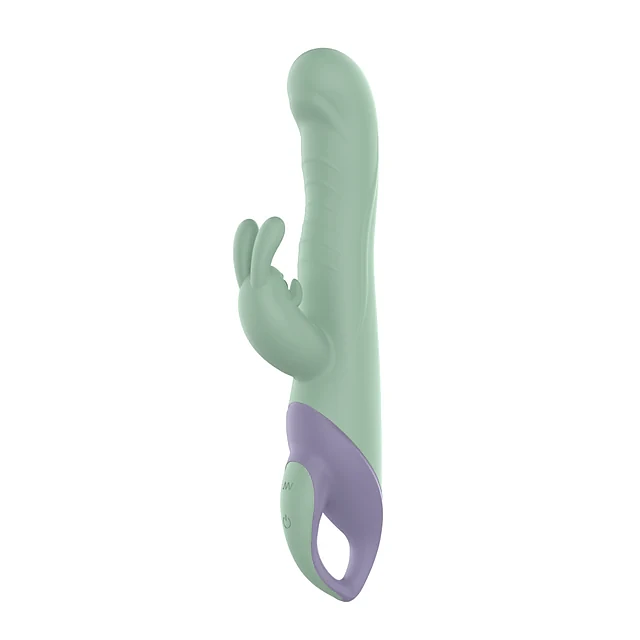
What every order ships with, and how it is checked before it leaves the line.
Twelve things separate a first order that runs from one that stalls. They are the same twelve whether you are evaluating DuckDuo or another supplier — we would rather you ask them than skip them.
| Signed golden sample | Before mass production, the approved sample is signed and dated by both sides, and one copy stays with each. Every later comparison — first article, in-process, final — is measured against that physical unit, not against a photograph. |
|---|---|
| Quality agreement with AQL levels | A written document naming the AQL levels for critical, major and minor defects, the sampling plan, and what happens when a lot fails. Ask for it before the deposit, not after the first shipment. |
| First article inspection report | Dimensions, silicone hardness, color and function measured on the first unit off the line and tabulated against the golden sample. This is the report that catches a tooling problem while the fix is still cheap. |
| Defective rate | Ask which number is meant. Outgoing defect rate is measured at final inspection; field defect rate is measured at your customer. Ours is quoted as outgoing, below 0.1%, because that is the only figure a factory can measure itself. |
| On-time delivery rate | We do not publish a percentage — a factory quoting one is usually quoting its own spreadsheet. What is checkable is the record: twelve consecutive quarterly orders from one European distributor, lead time held at 28 days. |
| Production readiness review | A short review before the run starts: tooling signed off, bill of materials frozen, packaging artwork approved, test fixtures in place. Skipping it is how a 25-day lead time quietly becomes 45. |
| Initial lot monitoring | The first production lot after any change — new tooling, new material supplier, new color — is inspected more densely than steady-state. Ask what changes trigger it, and who signs the release. |
| Verifiable certification numbers | A certificate is only worth what can be checked. The CE Declaration of Conformity, RoHS statement, MSDS, IPX5 report and UN 38.3 all carry issuing-body reference numbers your compliance team can verify without asking us again. |
| Penalty schedule | Late-delivery and quality-failure terms written into the purchase order rather than left to goodwill. If a supplier refuses to put a number on it, that refusal is itself the answer. |
| ODM vs OEM | ODM means the factory designs it and you brand it; OEM means you bring the specification. Most first orders are ODM. Knowing which one you are buying decides who owns the design file and who carries the compliance evidence. |
| Hero SKU | Launch one hero SKU properly rather than five badly. The hero SKU carries the reviews, the ad spend and the search equity; the rest of the range exists to catch the customers it attracts. |
| Discreet outer carton | A plain outer carton with a neutral SKU code, no product photography and no category words. It matters for retail partners, for customs in some markets, and for the customer who would rather the box did not announce itself. |
| A written RFQ, not a chat thread | Send the RFQ in writing — model, quantity per SKU, destination market, packaging, target landed cost and required date. A written RFQ is what makes two suppliers comparable, and it is the only version of the conversation that survives a change of buyer on either side. |
| A live video factory tour | Ask to see the line running on a live video call rather than a edited clip: the molding area, the assembly benches, the burn-in rack and the final inspection table. Recorded footage shows what a factory wants you to see; a live call shows what is on the floor that morning. |
| Second source and backup supplier | For anything you intend to sell for more than one season, ask how a second source would be qualified and what the changeover time is. A backup supplier you have never sampled is not a backup — it is a rumor. Qualifying one while the first is healthy is the cheap version. |
| Supply chain resilience, concretely | Resilience is not a slogan; it is four answers. Which components are single-sourced? How much safety stock sits on them? What is the substitute if a silicone or motor supplier fails? How long does requalification take? Ask for those four in writing and the conversation stops being abstract. |
A checklist is only useful in sequence. The one that holds up in practice is staged verification: start with the cheapest checks and let a failed one stop the process before a bulk order is placed or any money is involved.
Two of those steps cost nothing and catch most of what goes wrong. Ask for a live video factory audit — a call showing the floor that morning, not an edited clip — and run a reverse image search on any product photography a supplier sends you, because stolen imagery is still the most common tell. If a supplier pressures you to skip a step, that pressure is the finding.
A first order that arrives clean is the easy part. What protects the second and third is written before the first container loads — alongside the quality agreement and the penalty schedule above.
| Clause | What it should say |
|---|---|
| Non-conformance handling (NCR/CAPA) | A written non-conformance report for any lot failing its AQL, with a root-cause analysis and a corrective-and-preventive-action plan, and re-inspection to verify the fix before the next lot runs. We catch a defect at the stage it occurs because inspection is staged — IQC at incoming material, IPQC during assembly, FQC at the end of the line and OQC as 100% final inspection — not at your customer’s returns desk. |
| Reorder price stability | The quoted unit price held for reorders placed within the agreement period, and a reorder MOQ no higher than the first order’s. A quote that expires with every reorder is a recurring negotiation, not a price; on existing molds the floor is already 300 units per SKU, so the reorder bar should not climb above it. |
| Resale documentation | A compliant commercial invoice naming your legal entity, plus the same reference-numbered certificates every order already ships with — CE Declaration of Conformity, RoHS statement, MSDS, IPX5 test report and UN 38.3 — so your downstream customers can verify each one without coming back to you. A certificate without a reference number is a sentence, not evidence. |
| Review cadence | A quarterly business review covering outgoing defect rate and on-time delivery across the relationship, not just the last lot. Ours is quoted as outgoing defect rate, below 0.1%, because that is the only figure a factory can measure itself; a QBR is where a drift in either number gets discussed before it becomes a returned container. |
NCR/CAPA and quarterly-business-review practices above reflect common contract-manufacturing procedure; they are not legal advice, and your procurement team should set the exact thresholds and response windows.
OEM vs private label, MOQ, lead time, NDA and the compliance pack — answered directly.
Private label puts your branding on our proven base SKUs — fastest to launch, lowest risk. OEM builds to a specification you provide, including different shapes, motors or materials. Custom mold is your own tooling, which you fund, and it is eligible for regional exclusivity against a minimum annual volume. Stock wholesale simply resells our existing catalog under your name.
300 units per SKU on existing molds and standard colorways. Custom molds start from 1,000 units, and gift sets or multi-piece kits from 500. The MOQ for each model is shown on its product page, and anything shown as “on request” means we quote it case by case.
Yes. We offer private label on standard base SKUs with your own branding, and custom-mold designs when you fund the tooling. Both can carry an NDA, and custom-mold designs are eligible for regional exclusivity against a minimum annual volume.
A branded sample takes 3–5 business days, and the sample cost is credited back on your first production order. Production runs 25–35 days after sample approval and deposit, with rush orders of 20 days on in-stock base SKUs.
Yes. Both private-label and custom-mold programs can carry an NDA so your molds, packaging and designs stay your exclusive assets. Custom-mold designs are eligible for regional exclusivity against a minimum annual volume agreed in the contract.
Every order ships with a compliance pack: CE Declaration of Conformity, RoHS statement, MSDS, IPX5 test report and UN 38.3. Production passes four-stage QC (IQC, IPQC, FQC, OQC) with 100% final inspection, and SGS, Bureau Veritas or QIMA third-party inspection is welcome before shipment.
Yes — and we would rather you did. Before mass production the approved sample is signed and dated by both sides and one copy stays with each, so every later inspection is measured against a physical unit rather than a photograph. The quality agreement names the AQL levels for critical, major and minor defects, the sampling plan, and what happens when a lot fails. Ask for both before the deposit, not after the first shipment.
Outgoing defect rate is quoted below 0.1%, measured at final inspection — that is the figure a factory can measure itself, so it is the figure we state. We do not publish an on-time delivery percentage, because a supplier quoting one is usually quoting its own spreadsheet. What is checkable is the record: twelve consecutive quarterly orders from one European distributor with lead time held at 28 days.
This is the least-answered question in the category and the one that decides whether you can still support the product in year three. The honest answer for these devices is that the part which fails is almost always the motor or the battery, and both sit inside a sealed, waterproof housing — so “can I buy spare parts” is the wrong question. The workable one is: what do you replace the whole unit with, at what price, and for how long after the SKU is discontinued. Ask for three things in writing: the replacement window, the replacement unit price as a percentage of the original trade price, and whether a replacement is the same SKU or whatever is current when the claim arrives. A supplier who has not thought about it will answer the first and improvise the other two, which is exactly what you want to find out before you order rather than after.
Most first orders are ODM: the factory designs the product and you brand it, with Pantone matching and your own dieline. OEM means you bring the specification — different shape, motor, silicone hardness or firmware — and the tooling is quoted per project. The difference decides who owns the design file and who carries the compliance evidence, so it is worth settling before the sample round rather than after it.
Launch one hero SKU properly rather than five badly. The hero SKU carries the reviews, the ad spend and the search equity; the rest of the range exists to catch the customers it attracts, and can follow once the first one has a repeat rate. Outer cartons ship plain as standard — a neutral SKU code, no product photography and no category words — which matters for retail partners, for customs in some markets, and for the customer who would rather the box did not announce itself.
Ask for three fields before you look at the logo: the certificate number, the issuing body, and the scope statement. The number can be checked against that body’s public register in about a minute. The scope is the part buyers skip — it says whether the audit covered molding and assembly of the product you are ordering, or only a sales office. This page does not print a certification logo, because a certificate you cannot look up is decoration. Ask for the number and the scope with your quotation.
Social audits are commissioned by a buyer for a specific cycle, so the useful question is not “do you have one” but “whose audit, which cycle, and what was the rating”. Ask for the report PDF rather than the badge: it names the audit date, the auditing company and every finding, including the ones still open. A supplier who can only produce a logo is telling you that someone, at some point, audited something.
Every model DuckDuo already builds is a mold that exists, is tooled and has a compliance history — which is why private label on an existing mold starts at 300 units while a new one starts at 1,000 or more. Prices below are current retail; your unit cost is quoted against quantity, packaging and destination.
Trade termswholesale terms and MOQ·certificates and restricted markets·how the DuckDuo factory is set up
Send one message with your target market, model interest and monthly volume. A person replies with a quote, usually within one business day.
Four pieces that go deeper on the questions buyers ask before the quote — the documents to put in writing, the inspection that protects both sides, how landed cost is actually built, and how distribution channels stay under control.
Buying guides minimum order quantity for a first order· the golden sample, the AQL level, and who signs it off· what landed cost and freight do to your margin· distributor, agent or reseller: who does what
Paying for a mold and owning it are two separate things, and only a written clause joins them. Three arrangements exist in practice: buyer-paid and buyer-owned, tooling cost amortized into the unit price, and factory-owned. Ask which one a quotation describes before approving it, and name each tool in a schedule rather than referring to tooling in general. Amortization is a payment schedule, not an ownership transfer — absorbing the tooling and owning the tooling are not the same sentence.
The same schedule should cover the things a repeat run actually depends on: CAD files, drawings, process settings, assembly jigs and test fixtures. A steel mold without the settings that make it run is only half the asset. Private label applies your brand to an existing catalog platform; the platform design and the mold stay with whoever developed them. When the product design itself has to be yours, that is an OEM program with its own drawings, tooling and agreement, not a packaging choice.
Ask about release terms at the same time as the tooling quote, when they are still cheap to agree, and about spare parts and replacement units in the same conversation. Both are listed in the wholesale terms; the document side of shipping them separately is on the compliance page.